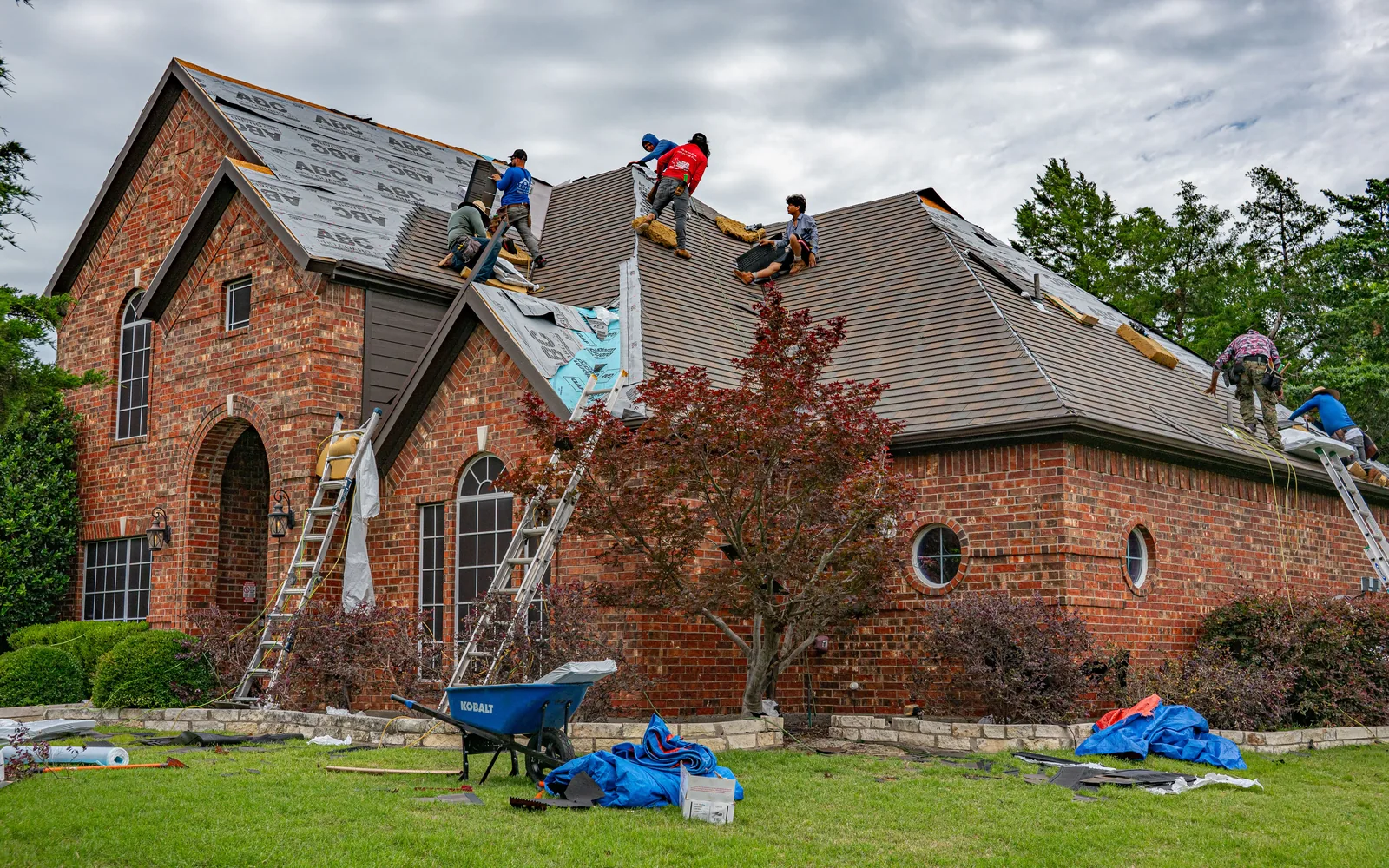
Condition, scope & system planning
After a storm, prioritize safety, active water control, documentation, and a clear repair scope
Storm damage may involve missing or lifted shingles, displaced tiles, dented or loosened metal, damaged flashing, fallen limbs, punctures, wet decking, broken gutters, and interior water entry.
Do not climb onto a wet, steep, damaged, or debris-covered roof. Photograph conditions safely from the ground and interior, protect belongings, collect leaking water, and contact qualified help for emergency dry-in when needed.
Documentation should separate pre-existing wear from storm-related conditions. Record dates, rooms affected, visible exterior damage, temporary measures, contractor findings, invoices, and communication with the insurer.
Homeowners should be cautious about high-pressure sales, promises about claim approval, requests to sign broad documents immediately, or contractors who cannot provide verifiable licensing and insurance information.
The final scope should address temporary work, permanent repair or replacement, permits, materials, deck and flashing damage, cleanup, inspections, and coordination with the property owner and insurer.
Items to include when comparing proposals
- Personal safety and downed power-line hazards
- Interior water control and property protection
- Ground-level photos and date of the event
- Temporary tarp or dry-in documentation
- Contractor license and insurance verification
- Written inspection findings and scope
- Insurance communication without promises of coverage
- Permanent repair, permit, inspection, and warranty
Helpful official resources
These sources provide additional information relevant to the topic.
Questions homeowners often ask
Should I call a roofer or insurance company first?
For active water entry, arrange safe emergency protection promptly and notify the insurer according to the policy. Document conditions and temporary work.
Can a contractor guarantee the insurance company will pay?
Coverage decisions belong to the insurer under the policy. Contractors can document conditions and provide estimates but should not guarantee claim outcomes.
What should I do before a storm arrives?
Review NOAA and local emergency guidance, secure loose outdoor items, clear drains if safe, document the property, and avoid last-minute roof work in dangerous conditions.