Condition, scope & system planning
Commercial roofing proposals should account for operations, drainage, access, penetrations, phasing, and documented maintenance
Commercial properties may use single-ply membranes, modified bitumen, built-up roofing, metal, coatings, tile, shingles, or combinations of steep- and low-slope systems.
The roof often contains HVAC units, curbs, ducts, pipes, drains, scuppers, parapets, skylights, solar equipment, signs, and service traffic. These details can be more important than the open field of the roof.
A useful inspection may include moisture evaluation, seam and flashing review, drainage, edge securement, roof access, interior leak history, repairs, traffic patterns, and warranty requirements.
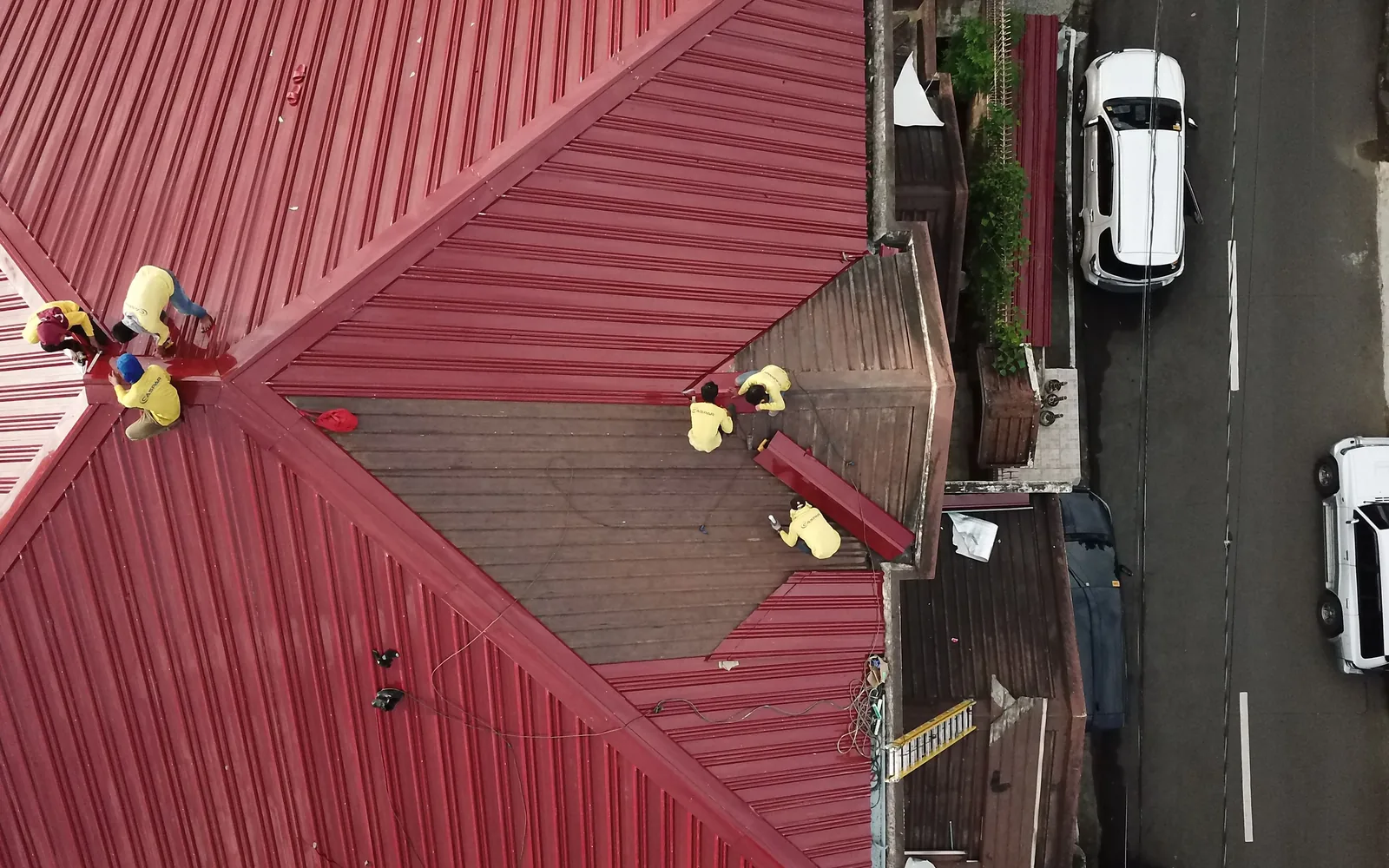
Work may need to be phased around tenants, customers, deliveries, noise, odor, parking, pedestrian routes, rooftop equipment, and operating hours. Safety and communication belong in the proposal.
Compare system type, preparation, tear-off or recover assumptions, insulation, drainage corrections, attachment, penetrations, warranty, inspections, maintenance plan, and documentation.
Items to include when comparing proposals
- Building use, operating hours, tenants, and access
- Existing system, age, warranty, and repair history
- Drainage, ponding, drains, scuppers, and gutters
- Wet insulation or substrate evaluation
- Equipment curbs, penetrations, parapets, and edges
- Phasing, odor, noise, parking, and pedestrian protection
- Manufacturer inspections and warranty requirements
- Ongoing maintenance and repair documentation
Questions homeowners often ask
Can a commercial roof be repaired without disrupting operations?
Often work can be phased, but noise, odor, access, parking, safety, weather, and rooftop equipment should be planned with the business.
What is a commercial roof maintenance plan?
It typically includes scheduled inspections, drainage cleaning, sealant and flashing review, minor repairs, documentation, and after-storm checks.
Can a commercial roof be coated?
Some roofs are candidates after cleaning, repairs, adhesion testing, and moisture evaluation. The coating must be compatible and approved for the existing system and conditions.